
Why is MTA different from other test automation tools and what problems does it solve.
Menditect’s “Direct Model Testing” differs from other test tools because it uses the backend elements (object actions and microflows) from a Mendix app to define your tests.
Now, this paradigm is more powerful than ever. Because MTA has a shared context with the Mendix model, it serves as the perfect foundation for our Model Context Protocol (MCP) server integration. This allows Mendix’s MAIA (or other LLMs) to reason effectively about your application to design tests, without ever needing write access to the Mendix model itself. You get the speed of AI test generation without polluting your app with test code.
“Menditect is the only test tool in the market that allows you to test a Mendix app on all test levels (from unit to UI) with AI-assisted generation, without having to maintain test code in your app!”
Request a demo to see “Direct Model Testing” in action
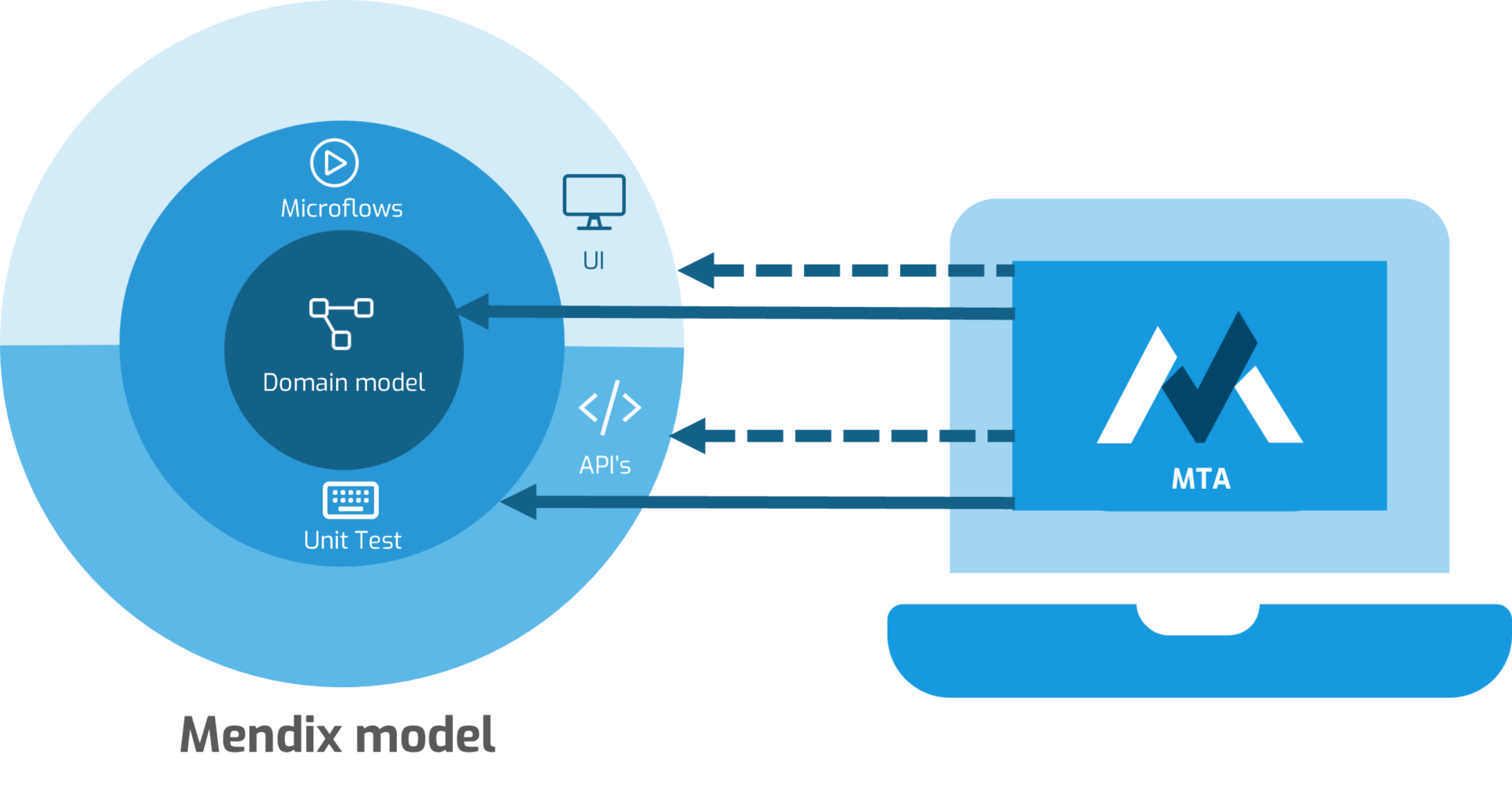
If you compare MTA to other test tools, the main differences are that MTA:
MTA is specifically made for testing Mendix. MTA can be integrated with standard CiCd pipelines and testmanagement tools in order to function in a multi platform app environment
Compare MTA to other Mendix test tools

You should convert your existing test automation to MTA if you want to:

Test automation is not always easy and might have its own particular problems. Do you recognize any of these?
Read how MTA helps you solve them


| info@menditect.com | |
| +3185 - 4010494 | |
| KvK: 82975795 | |
| Follow us on LinkedIn |
Enter your information and choose a day and time when you would like to meet Menditect sales (1,5 hrs).