
Test automation is not always easy to implement, and as Mendix moves toward an agentic application platform, traditional manual testing methods are simply no longer sufficient. However, the introduction of the Model Context Protocol (MCP) server fundamentally changes the economics and speed of test automation.
Read how Menditect Test Automation (MTA) leverages AI orchestration and Direct Model Testing to solve your biggest test automation problems.
Testing a bottleneck in delivery? Frequent and fast delivery of applications is only possible if all steps in the chain are equally fast. Mendix’s MAIA speeds up your development process exponentially, but manual QA often becomes the new bottleneck, stalling your releases.
How MTA helps: MTA serves as an MCP server that integrates seamlessly with Mendix’s MAIA. This allows you to generate comprehensive unit and regression tests 6 to 10 times faster than manual methods. By automating the QA bottleneck, you can truly test at the speed of thought, ensuring that AI-assisted development is never slowed down by manual validation
Request demo

Agile development and continuous UI changes often lead to flaky or fragile tests that demand constant debugging from your QA team. The time invested in maintenance can quickly surpass the time saved by automation.
How MTA helps: MTA acts as an intelligent, autonomous agent that can analyze and repair broken tests on its own. For example, if a test fails due to a formatting error, the AI identifies the root cause, corrects the test steps, and reruns the test. Combined with our robust, Mendix-model-based locators, MTA reduces your maintenance overhead by an estimated 80%.
Read more about MTA features

Test automation requires additional knowledge of testing tools and scripting languages in your Mendix team. You prefer to have a solution to solve your test automation problems that can be set up and maintained in your Mendix team
How does MTA help?
Experience the ease of use of MTA in a demo

Upgrading applications from Mendix 9 or 10 to Mendix 11 unlocks powerful new AI features, but the massive effort required to test such an upgrade often holds teams back. The fear of breaking critical business logic during migration creates a costly delay.
How MTA helps:
Want a free try out?

An automated test needs specific data permutations to be executed. When Mendix models change, setting up and cleaning up this test data often takes a massive amount of manual scripting effort.
How MTA helps: MTA brings AI-assisted data management to your testing pipeline. Simply ask the AI what data is required for a specific test scenario, and MTA will automatically generate the scripts to prepare the database environment and clean up the generated data afterward
Visit our demo to see how testdata is maintained in MTA

Free tools like the Mendix Unit Testing module and open-source Playwright work fine for tiny projects. But once you scale beyond 3 or 4 applications, the overhead of maintaining fragmented, code-heavy test scripts quickly wipes out any cost savings.
How MTA helps: MTA is a unified, no-code platform that combines unit, process, and UI testing. With deep Mendix integration, self-healing capabilities, and built-in data management, MTA is proven to be the most cost-effective and scalable choice for enterprise application landscapes.
When to choose MTA over Free & Open-Source Tools
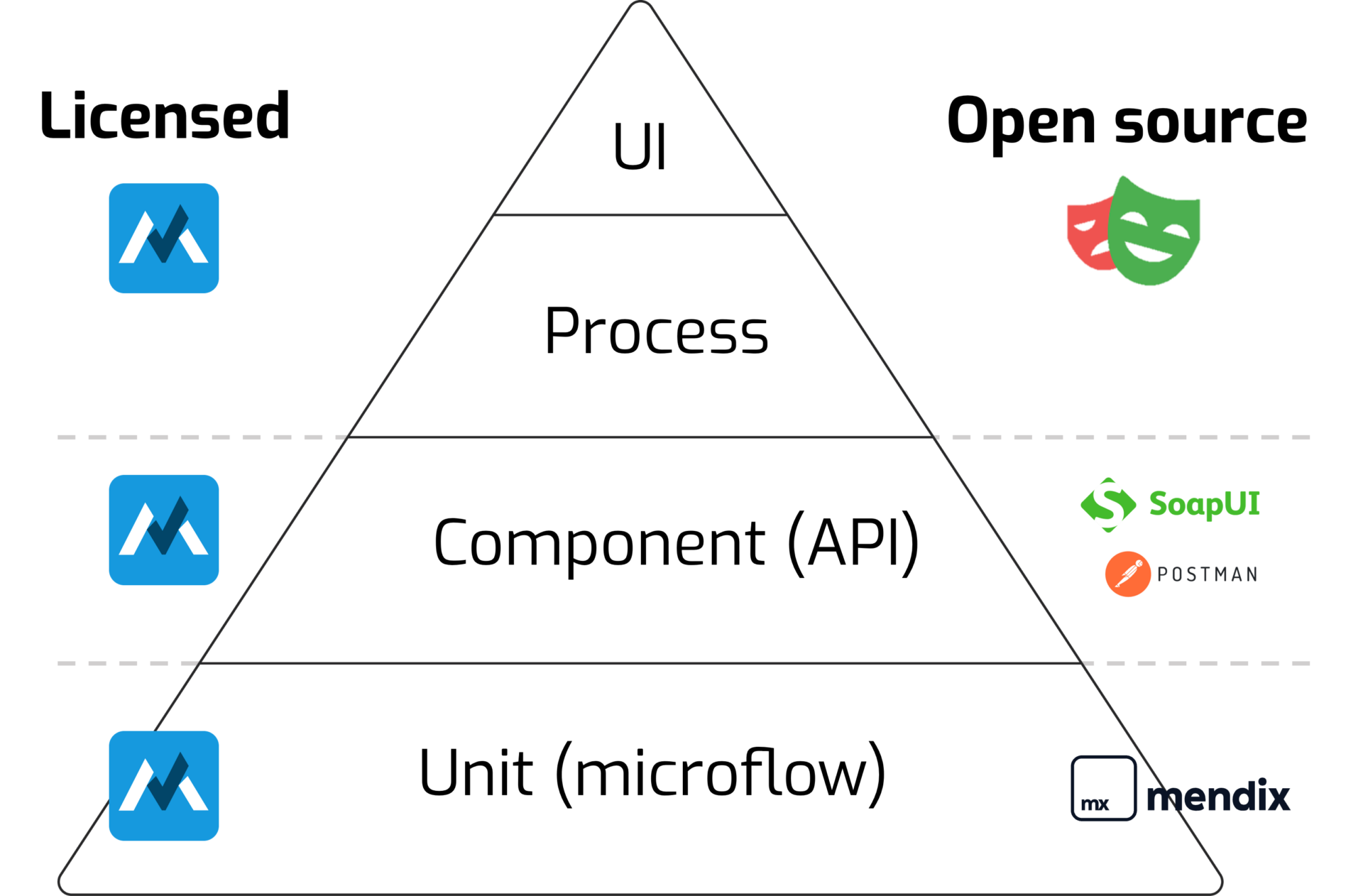
Setting up test automation usually requires a large upfront investment and requires maintenance throughout the lifecycle of an application, making it hard to justify for some projects.
How MTA helps: The integration of AI drastically changes the economics of QA. Because test generation is heavily automated by the AI, the token costs for these operations are incredibly minimal—estimated at under €0.10 for standard test generation tasks. By slashing setup time and virtually eliminating manual repair work, MTA makes enterprise-grade testing exponentially cheaper.
Read how MTA saves you money

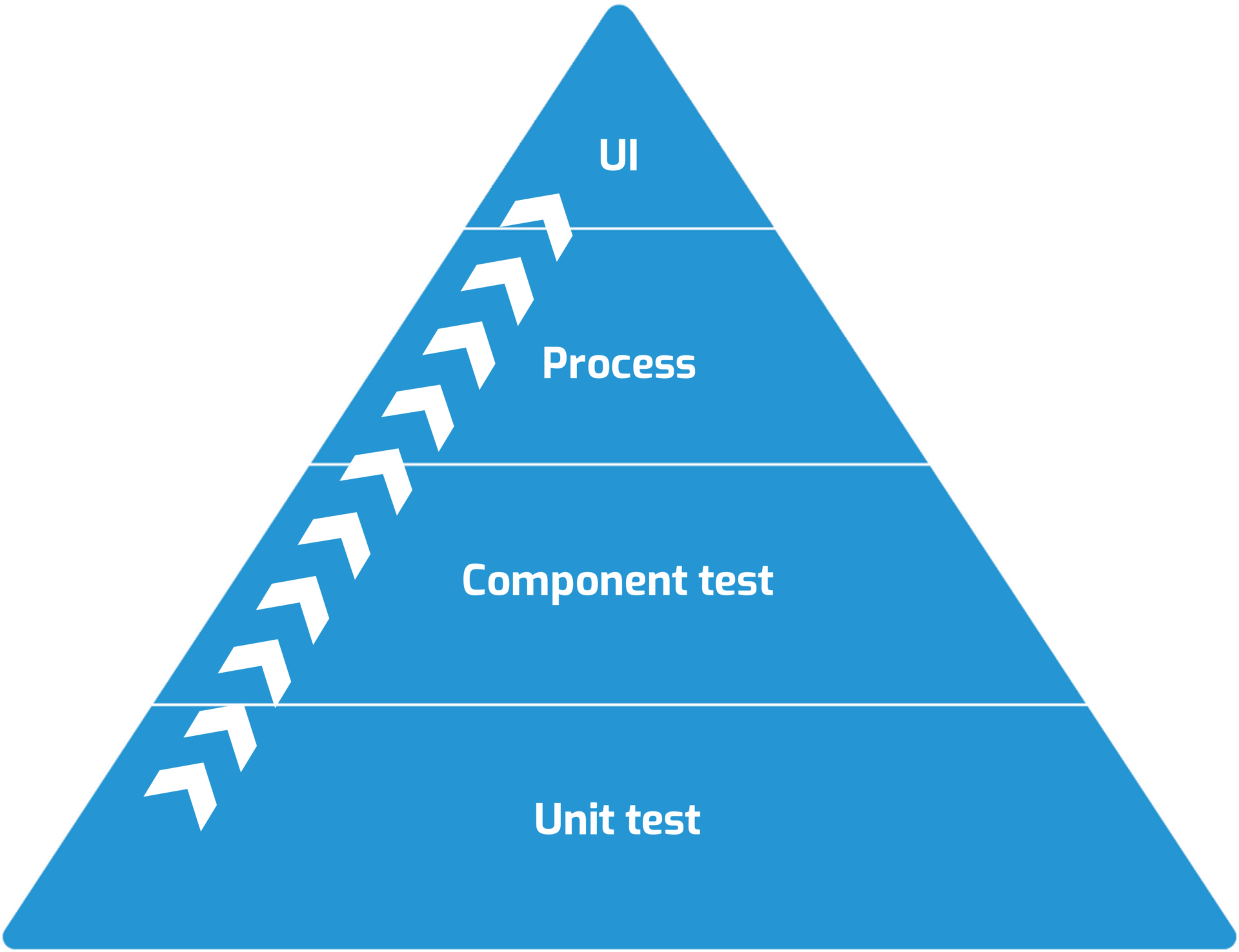
In Mendix projects, screen testing techniques are used for regression testing. These are costly, maintenance and error prone, so ideally you want to minimize them and test as much as possible via the backend. How can you build the optimal test coverage?
How does MTA help?
Learn more about MTA in our demo

When using different tools for each test level it is easy to create overlapping tests. This leads to more tests than needed when all test levels would be available in one tool.
How does MTA help you?
Test capabilities

| info@menditect.com | |
| +3185 - 4010494 | |
| KvK: 82975795 | |
| Follow us on LinkedIn |
Enter your information and choose a day and time when you would like to meet Menditect sales (1,5 hrs).